BMWs EV-Pionier Stefan Juraschek bringt auf dem Acsia Campus Connect aufstrebende Ingenieure aus Kerala zusammen

Sep 14, 2024
Acsia Youth Connect

Am Rande der Einweihung des Acsia Global HQ und des F&E-Zentrums trafen sich Studenten der besten technischen Hochschulen mit Acsia und Industrieexperten, um die Zukunft der Automobiltechnologie zu erkunden.

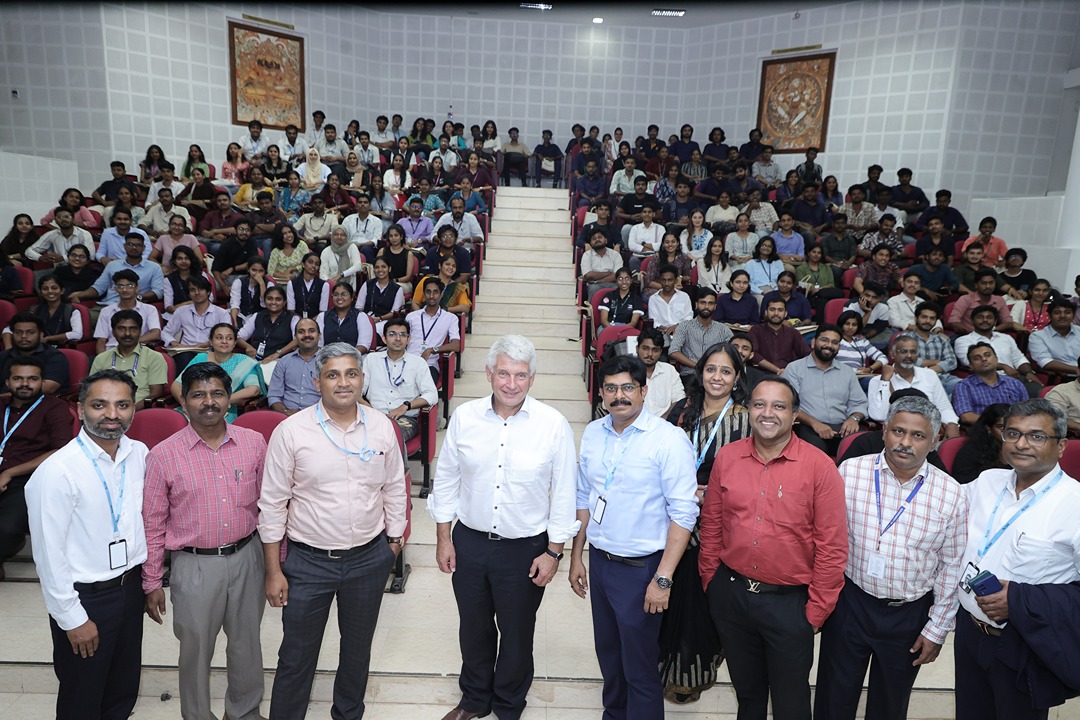
Thiruvananthapuram, 27. August 2024 – In einer bemerkenswerten Veranstaltung am College of Engineering Thiruvananthapuram (CET) inspirierte Stefan Juraschek, der Visionär hinter der Elektrofahrzeugrevolution von BMW und jetzt strategischer Berater bei Acsia Technologies, über 160 Ingenieurstudenten mit seinen tiefen Einblicken in die Zukunft der Automobiltechnologie. Juraschek, der als “Vater der EV-Fahrzeuge bei BMW” verehrt wird, fesselte das Publikum mit seinen Einblicken in die sich entwickelnde Welt der Automobiltechnologie, insbesondere im Bereich der Elektrofahrzeuge (EVs). Seine Botschaft war klar: Innovation, Beharrlichkeit und Zusammenarbeit sind der Schlüssel zur Gestaltung der Zukunft der Automobilindustrie.

Das von Acsia, einem weltweit führenden Anbieter von Softwarelösungen für die Automobilindustrie, der sich auf digitale Cockpits und Displays, e-Mobilität und Telematik spezialisiert hat, veranstaltete Acsia Industry Campus Connect Program bot Studenten von 10 führenden technischen Hochschulen eine unschätzbare Gelegenheit, mit Branchenführern in Kontakt zu treten, Ideen auszutauschen und innovative Entwicklungen in den Bereichen e-Mobilität, digitale Cockpits und mehr zu erkunden.

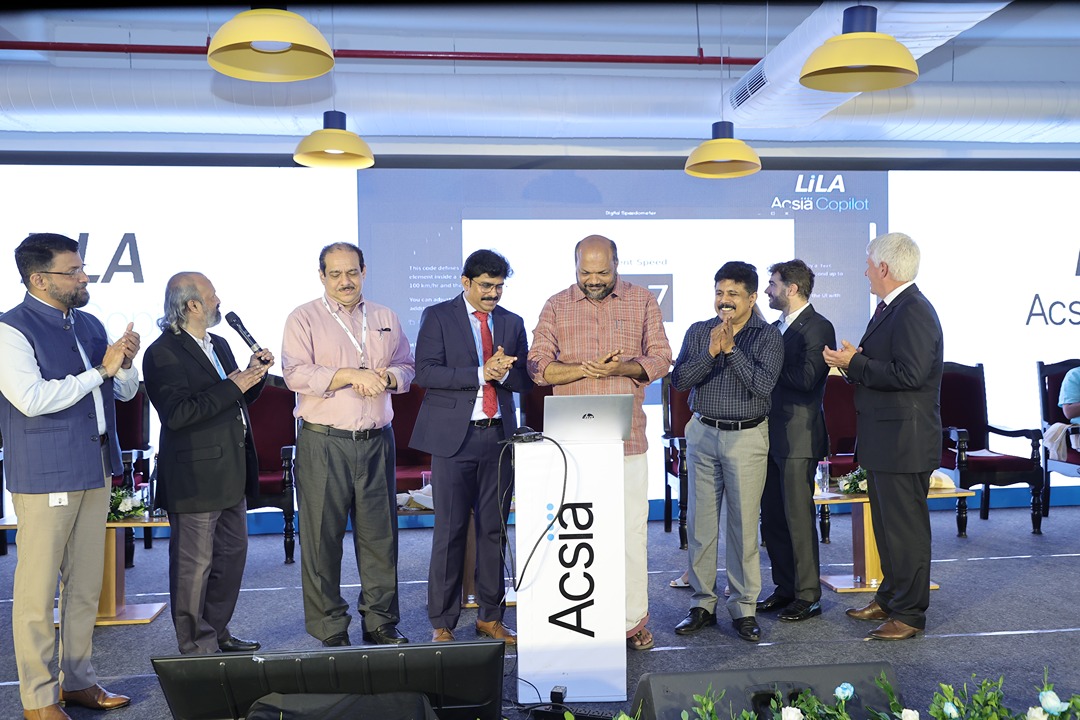
Die Veranstaltung Acsia Campus Connect fand am Rande der Einweihung des neuen globalen Hauptsitzes und Forschungs- und Entwicklungszentrums von Acsia in der Embassy Taurus TechZone im Technopark Phase III Campus in Thiruvananthapuram am 22. August 2024 statt. Der Industrieminister von Kerala, P. Rajeeve, eröffnete die Veranstaltung, auf der auch der ehemalige Minister und Kazhakkuttam MLA Kadakampally Surendran, der Hauptsekretär APM Mohammed Hanish IAS, Christina Hein und German Ferreira von der BMW Group, Stefan Juraschek, Jijimon Chandran, der CEO von Technopark, Col. Sanjeev Nair, der CEO von Kerala Startup Mission, Anoop P. Ambika, und der Leiter von Taurus Investment Holdings India, Ajay Prasad, sprachen.

“Bei Acsia glauben wir an die Kraft der Zusammenarbeit zwischen Wissenschaft und Industrie, um Innovationen voranzutreiben. Die Veranstaltung Acsia Industry Campus Connect ist ein Beweis für diese Überzeugung. Sie bietet Studenten eine Plattform, um mit Experten aus der Industrie in Kontakt zu treten und Einblicke zu gewinnen, die ihnen helfen werden, die Zukunft der Automobiltechnologie zu gestalten. Es ist unglaublich befriedigend, den Enthusiasmus und das Potenzial der nächsten Generation von Ingenieuren hier in Thiruvananthapuram zu sehen”, sagte Jijimon Chandran, CEO und Gründer von Acsia.

Ein zentraler Höhepunkt der Veranstaltung war eine Podiumsdiskussion, die von Sojan James, Principal Architect und Subject Matter Expert bei Acsia, moderiert wurde. Auf dem Podium saßen angesehene Persönlichkeiten aus Wissenschaft und Industrie, darunter Jijimon Chandran, Stefan Juraschek, Nibil P. M., AVP – Technology bei Acsia, und Dr. Savier, Direktor des Government Engineering College, Idukki, und ehemaliger Direktor des CET.

“Die Studenten hatten die einmalige Gelegenheit, sich mit Fachleuten für Softwarelösungen im Automobilbereich auszutauschen. Diese Programme sind für beide Seiten von Vorteil, sowohl für die Hochschulen als auch für die Industrie, da sie das Bewusstsein der Studenten für die Anforderungen der Industrie schärfen. Wir brauchen mehr Initiativen wie diese, um die Kluft zu überbrücken und die nächste Generation von Ingenieuren vorzubereiten”, sagte Prof. Sasi N., Associate Professor, Department of Mechanical Engineering, CET, und Faculty Advisor, Society of Automotive Engineers (SAE India).

Die Diskussion konzentrierte sich auf kritische Themen wie E-Mobilität und Elektrifizierung von Fahrzeugen, digitale Cockpits und Benutzererfahrung, Telematik und vernetzte Fahrzeuge sowie Forschung und Entwicklung in der Automobiltechnik. Die Podiumsteilnehmer gaben wertvolle Einblicke in die Herausforderungen und Möglichkeiten in diesen Bereichen und betonten die Notwendigkeit einer engen Zusammenarbeit zwischen Bildungseinrichtungen und der Technologiebranche, um Studenten auf zukünftige technologische Herausforderungen vorzubereiten.

“Das Programm war unglaublich aufschlussreich, insbesondere was das Verständnis der neuesten Technologien für Elektrofahrzeuge angeht. Die Interaktion mit Stefan Juraschek und den Experten von Acsia gab uns eine Perspektive aus der realen Welt, die wir im Klassenzimmer nicht oft bekommen. Es war auch eine großartige Gelegenheit, mehr über die Arbeit von Acsia zu erfahren”, sagte Priyadarsh K. V., ein Student des Fachbereichs Maschinenbau an der CET.

“Die Industry-Connect-Sitzungen gaben uns wertvolle Einblicke in die realen Herausforderungen im Automobilbereich. Die Diskussionen und praktischen Erfahrungen haben nicht nur unser Verständnis vertieft, sondern uns auch dazu motiviert, in unserer zukünftigen Karriere nach Spitzenleistungen zu streben”, sagte Sharlet George Kurien, Student der Informatik und des Ingenieurwesens im dritten Jahr am Saintgits College of Engineering in Kottayam.

In einer interaktiven Fragerunde hatten die Studenten die Möglichkeit, direkt mit den Podiumsteilnehmern zu sprechen. Die Teilnehmer stellten nachdenkliche Fragen und erhielten aufschlussreiche Antworten, die ihr Verständnis für die Dynamik und die Erwartungen der Branche vertieften. Dieses Segment kam besonders gut an, da es den Studenten die Möglichkeit gab, Zweifel zu klären und sich über ihren zukünftigen Karriereweg beraten zu lassen.

Das Programm hat nicht nur die nächste Generation von Ingenieuren inspiriert, sondern auch gezeigt, wie wichtig es ist, die Kluft zwischen Wissenschaft und Industrie zu überbrücken, um den technologischen Fortschritt voranzutreiben.

Kurien Noel Keeyath, Ingenieur bei Acsia, und Greeshma K. R., leitender Ingenieur bei Acsia, sowie Dr. Suresh, Direktor des CET, und Dr. Arun Surendran, Direktor des Trinity College und strategischer Berater von Acsia, sprachen ebenfalls auf der Veranstaltung.

Über Stefan Juraschek

Mit einer bemerkenswerten Karriere, die sich über mehr als dreieinhalb Jahrzehnte bei der BMW Group erstreckt, ist Juraschek ein Experte für Elektromobilität, elektrische Antriebe, Cybersicherheit und Fahrzeugdynamik. Während seiner Zeit bei der BMW Group hatte Juraschek mehrere wichtige Funktionen inne, unter anderem als Vizepräsident für Forschung und Entwicklung in der Abteilung Elektrik/Elektronik und als General Manager für Forschung und Entwicklung in den Bereichen Elektrik/Elektronik, elektrischer Antriebsstrang, Wechselrichter und Power Management.

Seine Beiträge waren maßgeblich an der Entwicklung von BMWs fortschrittlicher Technologie und Nachhaltigkeitsbemühungen beteiligt, die zu bahnbrechenden Fortschritten bei batterieelektrischen Fahrzeugen, Plug-In-Hybriden und Formel-E-Antriebssträngen führten.

Presse Kontakt

Athul Lal A G
Direktor für PR
Email: athul.lal@acsiatech.com
Mob: +91 81290 07793

Don’t miss an update!
Popular PRs
Acsia Technologies Powers Central Institute on Mental Retardation (CIMR) with Solar Energy
READ MORE ABOUT
CIMR Solar Project
Acsia Technologies versorgt das Central Institute on Mental Retardation (CIMR) mit Solarenergie
READ MORE ABOUT
CIMR Solar Project
Acsia Technologies Unveils New Copilot LiLA
READ MORE ABOUT
LiLA Acsia Copilot
Acsia Technologies stellt den neuen Copilot LiLA vor
READ MORE ABOUT
LiLA Acsia Copilot
BMW’s EV Pioneer Stefan Juraschek Engages Kerala’s Emerging Engineers at Acsia Campus Connect
READ MORE ABOUT
Acsia Youth Connect
Request a Meeting
AH2025/PS06 | AI/ML

Context

Continuous employee learning is essential for companies to stay competitive in a fast-changing business environment. Organizations adopt Learning Management Systems (LMS) to upskill employees, meet compliance requirements, and support career growth. However, existing LMS platforms often act as content repositories rather than personalized learning assistants.


Pain Point

  • Employees are overwhelmed by generic training content and struggle to find relevant courses.
  • Managers lack visibility into skill gaps and training effectiveness.
  • Companies spend heavily on training programs without clear insights into ROI or business impact.
  • Current LMS solutions provide limited personalization and recommendations, leading to low engagement.


Challenge

Develop an AI-powered LMS that goes beyond course hosting, by:

  • Mapping employee skills, roles, and career paths to relevant training modules.
  • Using learning analytics to predict skill gaps and recommend personalized learning journeys.
  • Providing managers with team-level insights on training progress and skill readiness.
  • Enabling employees to learn flexibly, with adaptive learning paths based on performance.


Goal

Create a smart, data-driven LMS that improves employee engagement, learning outcomes, and workforce readiness while giving leadership clear visibility into training impact.


Outputs

  • Personalized learning recommendations for each employee.
  • Skill gap dashboards for managers and HR.
  • Learning progress analytics with completion, performance, and adoption rates.
  • Training ROI insights linked to productivity and career growth.


Impact

  • Employees gain relevant, career-aligned skills faster.
  • Managers can strategically deploy talent based on verified skills.
  • Organizations see higher training ROI and improved workforce agility.
  • Creates a culture of continuous learning, driving retention and innovation.
AH2025/PS05 | AI/ML

Context

Continuous employee learning is essential for companies to stay competitive in a fast-changing business environment. Organizations adopt Learning Management Systems (LMS) to upskill employees, meet compliance requirements, and support career growth. However, existing LMS platforms often act as content repositories rather than personalized learning assistants.

Pain Point

  • Employees are overwhelmed by generic training content and struggle to find relevant courses.
  • Managers lack visibility into skill gaps and training effectiveness.
  • Companies spend heavily on training programs without clear insights into ROI or business impact.
  • Current LMS solutions provide limited personalization and recommendations, leading to low engagement.

Challenge

Develop an AI-powered LMS that goes beyond course hosting, by:

  • Mapping employee skills, roles, and career paths to relevant training modules.
  • Using learning analytics to predict skill gaps and recommend personalized learning journeys.
  • Providing managers with team-level insights on training progress and skill readiness.
  • Enabling employees to learn flexibly, with adaptive learning paths based on performance.

Goal

Create a smart, data-driven LMS that improves employee engagement, learning outcomes, and workforce readiness while giving leadership clear visibility into training impact.

Outputs

  • Personalized learning recommendations for each employee.
  • Skill gap dashboards for managers and HR.
  • Learning progress analytics with completion, performance, and adoption rates.
  • Training ROI insights linked to productivity and career growth.

Impact

  • Employees gain relevant, career-aligned skills faster.
  • Managers can strategically deploy talent based on verified skills.
  • Organizations see higher training ROI and improved workforce agility.
  • Creates a culture of continuous learning, driving retention and innovation.
AH2025/PS04 | AI/ML

Context

Software teams struggle to diagnose system failures from massive log files. Manual analysis is slow, error-prone, and requires expert knowledge. Root cause extraction from unstructured, noisy logs. Use creative algorithms, LLM prompting strategies, or hybrid heuristics.

Pain Point

  • Manual log analysis is slow, error-prone, and requires deep expertise in both the system and its environment.
  • Critical issues can be missed or misdiagnosed, leading to longer downtimes and higher costs.
  • Existing monitoring tools often raise alerts without actionable insights, leaving developers to do the heavy lifting.

Challenge

Build an AI-powered log analytics assistant that can:

  • Ingest and parse unstructured application logs at scale.
  • Automatically flag potential defects or anomalies.
  • Summarize possible root causes in natural language.
  • Provide actionable insights that developers can use immediately.

Goal

Deliver a working prototype that:

  • Operates on sample log data.
  • Produces insights that are accurate, usable, and easy to interpret.
  • Bridges the gap between raw log data and developer-friendly diagnostics.

Outputs

  • Automated defect detection (flagging anomalies in logs).
  • Root cause summaries in natural language.
  • Actionable recommendations (e.g., suspected component failure, probable misconfiguration).
  • Visualization/dashboard (if possible) for quick triage.

Impact

  • Reduced time to diagnose failures, lowering downtime and maintenance costs.
  • Increased developer productivity, freeing engineers to focus on fixes rather than sifting logs.
  • Improved reliability of complex software systems.
  • Scalable approach that can be extended across industries (finance, automotive, telecom, healthcare).
AH2025/PS03 | AI/ML

Context

Drivers and passengers spend significant time in vehicles where comfort, safety, and accessibility directly affect satisfaction and well-being. Yet today’s in-car systems remain largely static and manual, requiring users to adjust climate, seats, infotainment, and navigation themselves. With increasing connectivity, AI offers the potential to transform cars into adaptive, intelligent companions.

Pain Point

  • Current in-car experiences are one-size-fits-all, failing to account for individual preferences or needs.
  • Manual adjustments while driving can be distracting and unsafe.
  • Accessibility gaps (e.g., for elderly passengers or those with hearing/visual impairments) remain unaddressed.

Challenge

Build a Generative AI-powered cockpit agent that dynamically personalizes the in-car experience based on contextual data such as:

  • Driver profile (age, preferences, past behaviour).
  • Calendar & journey type (work commute, leisure trip, urgent travel).
  • Mood (estimated from inputs like speech, facial cues, or self-reporting).
  • Accessibility needs (visual/hearing impairments, elderly passengers).

Goal

Deliver real-time, adaptive personalization of:

  • Comfort settings: AC, seat adjustments, lighting.
  • Infotainment: music, podcasts, news.
  • Navigation guidance: route optimization based on urgency, preferences, and accessibility.

Outputs

  • Dynamic in-car assistant that responds to context in real-time.
  • Personalized environment settings for comfort and safety.
  • Adaptive infotainment & navigation suggestions tailored to mood, journey type, and accessibility.

Impact

  • Safer driving experience with fewer distractions.
  • Higher passenger satisfaction through comfort and entertainment personalization.
  • Improved accessibility and inclusivity for diverse user needs.
  • New value proposition for automakers: cars as intelligent, personalized environments, not just vehicles.
AH2025/PS02 | AI/ML

Context

Automotive software development is highly complex, involving multiple tools (Jira, GitHub, MS Teams, Confluence), distributed teams, and strict compliance standards (ISO 26262, ASPICE). Project managers must continuously monitor tasks, track resources, and identify risks. However, the sheer volume of data across tools makes real-time visibility and decision-making difficult.

Pain Point

  • Project managers waste time manually consolidating data from Jira, GitHub, and communication platforms.
  • Resource allocation bottlenecks (overloaded developers, idle testers) often go unnoticed.
  • Risks (delays, defects, dependency issues) are only discovered late, impacting delivery timelines.
  • Lack of predictive insights leads to reactive, rather than proactive, project management.

Challenge

Build an AI-powered project management assistant that can:

  • Auto-generate project dashboards by integrating Jira, GitHub, and MS Teams data.
  • Provide real-time resource allocation insights (who is overloaded, who is free).
  • Predict risks and delays using historical patterns and live progress signals.
  • Deliver natural language summaries for managers and stakeholders.

Goal

Enable project managers to see the full picture instantly, automate reporting, and take data-driven decisions on resources and risks without manual effort.

Outputs

  • Automated project dashboards (progress, backlog, velocity, open PRs/issues).
  • Resource allocation map showing workload distribution across the team.
  • Risk prediction engine (e.g., “Module X likely delayed by 2 weeks due to dependency on Y”).
  • AI-generated summaries (daily/weekly status reports in plain language).

Impact

  • Reduced management overhead → fewer hours wasted on reporting.
  • Improved predictability → early identification of risks and delays.
  • Optimal resource utilization → balanced workloads across teams.
  • Better stakeholder communication → clear, automated updates.
  • Scalable for enterprises → can be deployed across multiple automotive software teams.
AH2025/PS01 | AI/ML

Context

In modern organizations, assembling the right project team is critical to success. Managers must balance skills, experience, cost, availability, and domain expertise, but decisions are often made using intuition or partial information. This leads to suboptimal teams, missed deadlines, or budget overruns.

Pain Point

  • Team formation today is time-consuming and heavily manual, requiring managers to cross-check spreadsheets, HR databases, and project needs.
  • Costs and expertise trade-offs are rarely quantified, making it hard to justify team composition to leadership or clients.
  • Traditional staffing tools focus on availability but fail to optimize across multi-dimensional constraints (skills, budget, past project fit, timeline).

Challenge

Build a Generative AI assistant that takes as input:

  • Employee database (skills, past projects, availability, cost)
  • Customer project requirements (tech stack, timeline, budget, domain)

Goal

Enable managers to form the best-fit, economically feasible project teams in minutes, rather than days, while providing transparency into why each recommendation was made.

Outputs

  • Optimal team composition: Recommended employees, with justification.
  • Economic feasibility analysis: Skill coverage vs cost vs timeline.
  • Alternative team recommendations: Trade-off scenarios (e.g., lower cost, faster delivery, more experienced).

Impact

  • Faster project staffing → quicker project kick-offs.
  • Higher client satisfaction due to right skills on the right project.
  • Lower staffing costs through data-driven optimization.
  • A scalable framework that can be extended for hackathons, consulting firms, or large enterprise project staffing.